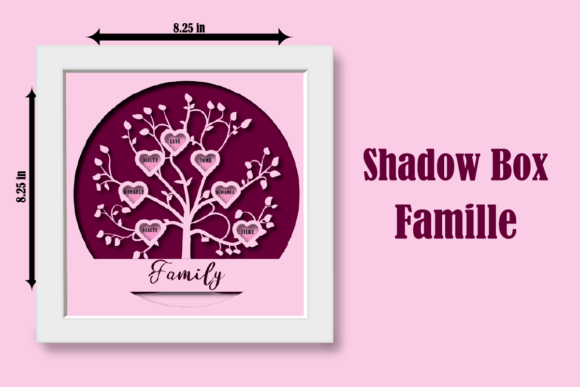
Shadow Box Famille Tree: A Designer’s Review
As a professional embroidery designer and product reviewer, I approach every new file with a critical eye. When evaluating the Shadow Box Famille Tree, my first thought isn't just about how pretty it looks on a screen, but how it will actually perform under the needle. This design is marketed as an exquisite combination of elegance and sophistication in the form of a 3D SVG, intended for home decor. However, for those of us running a craft business or managing an Etsy shop, the real test is whether this machine embroidery design can transition from a digital freebie to a high-value finished product that customers are willing to purchase.
First Impressions and Visual Hierarchy
Upon opening the digital embroidery file, the immediate impression is one of structured elegance. The "famille" spelling suggests a heritage or vintage aesthetic, which instantly positions this design for personalized gifts and heirloom-style projects. Visually, the shadow box concept implies depth. In embroidery terms, this usually translates to layered applique design elements or specific stitch density variations meant to create a three-dimensional effect. For a maker, this is exciting because texture sells. Flat embroidery can sometimes look generic, but a design that promises dimensional interest catches the buyer's eye in a crowded marketplace.
The layout appears balanced, which is crucial for commercial embroidery. Symmetry in family tree designs ensures that when you add custom names or dates, the overall composition doesn't become top-heavy or lopsided. As a reviewer, I appreciate that this design seems to account for negative space. Many intricate tree designs fail because they are too dense, causing fabric puckering. If the Shadow Box Famille Tree maintains open areas within the foliage or frame, it will be significantly more versatile across different fabric textures.
Real-World Application: The Custom Nursery Project
To truly evaluate this asset, I mentally placed it into a recent client scenario: creating a bespoke nursery wall hanging and matching baby embroidery items for a boutique order. The client wanted something timeless yet modern. Here is where the Shadow Box Famille Tree shines as a potential centerpiece. For a framed hoop art piece, the 3D SVG nature allows for precise cutting layers if you are using a laser cutter alongside your embroidery machine, ensuring crisp edges for the shadow box frame itself.
However, translating this to a sweatshirt embroidery project requires caution. While the design is elegant, complex shadow box details can get lost on fleece or french terry. In my experience testing similar heritage designs on custom apparel, I found that simplifying the background elements while keeping the central tree motif intact yields better results on garments. For a tote bag design, conversely, the full complexity works beautifully because canvas provides a stable foundation that supports higher stitch counts without distortion. This versatility makes it a strong candidate for small shop product lines, provided you adapt the stabilizer and hooping method to the specific substrate.
Navigating Fabric Limitations and Stabilization
Every experienced embroiderer knows that a beautiful digitizing file can turn into a disaster on the wrong material. When working with the Shadow Box Famille Tree, you must be mindful of fabric weight. Because this is categorized under Freebies, users sometimes assume it is a simple, lightweight design. Do not make this assumption. Shadow box effects often require multiple layers of stitching to achieve that sophisticated pop.
- Stretchy Fabrics: If applying this to knitwear or baby clothes, use a cut-away stabilizer and consider a light fusible mesh on top. The detail in the branches and frame could distort if the fabric shifts during the satin stitch or fill stitch sequences.
- Textured Surfaces: On linen or tea towels, the texture of the weave can compete with the design. I recommend using a water-soluble topping to keep the running stitch outlines crisp and prevent them from sinking into the fabric grain.
- Dark vs. Light Fabrics: Test thread colors rigorously. A shadow box relies on contrast to show depth. On dark fabric, ensure your outline stitches are light enough to define the shape; otherwise, the 3D effect vanishes, and it becomes a muddy blob of thread.
Commercial Viability for Sellers and Makers
For Etsy sellers and creative entrepreneurs, the value of this design lies in its perceived worth. Customers associate "family tree" motifs with emotional significance, allowing for higher price points on personalized gifts. However, since this is listed as a freebie, you must elevate the execution to distinguish your handmade product from hobbyist work. Professionalism comes from perfect registration and clean finishing.
I strongly advise creating printable mockups before listing any item featuring the Shadow Box Famille Tree. Digital previews help you visualize how the design scales. Does it look proportional on a 4x4 hoop versus a 6x10 hoop? Scaling vector-based SVGs is generally safe, but scaling embroidery files requires checking stitch density. If you resize this design significantly, verify that the satin stitches haven't become too wide (risking snagging) or the fill stitches too sparse (leaving gaps). These technical checks protect your brand consistency and customer trust.
Critical Pre-Stitch Checklist for Success
Before you commit this design to a final product or list it in your shop, run through this practical evaluation process. It saves time, thread, and reputation.
- Verify Licensing: Just because it is in the Freebies category does not automatically grant commercial rights for selling finished products or distributing the digital embroidery file. Always confirm the specific license terms included with the download.
- Test Stitch-Out: Never skip this step. Use scrap fabric that matches your intended final project. Check if the shadow box layers align perfectly. Misregistration kills the 3D illusion immediately.
- Analyze Stitch Types: Identify where the satin stitch borders meet the fill stitch interiors. Are there jump stitches that need trimming? Excessive manual trimming reduces profit margins in a craft business setting.
- Hoop Size Confirmation: Ensure your machine’s hoop size accommodates the design with adequate margin for stabilization. Crowding the hoop leads to tension issues.
- Wash Test: If selling baby embroidery or kitchen textiles, wash and dry your sample. Does the shadow box structure hold up? Does the fabric pucker after laundering? Durability is key for repeat buyers.
Elevating Home Decor with Technical Precision
The Shadow Box Famille Tree offers a wonderful opportunity to blend traditional sentiment with modern fabrication techniques. Its description as an artful combination of elegance and sophistication is accurate, but only if the maker respects the technical demands of the medium. Whether you are producing holiday embroidery for seasonal markets or year-round custom apparel, treat this file as a premium asset.
By focusing on proper stabilization, thoughtful color selection, and rigorous testing, you transform a digital download into a tangible, high-quality heirloom. Remember, in the world of commercial embroidery and handmade goods, the difference between a novice attempt and a professional masterpiece often lies in these unseen preparations. Use this design to showcase not just a family history, but your own dedication to quality craftsmanship.