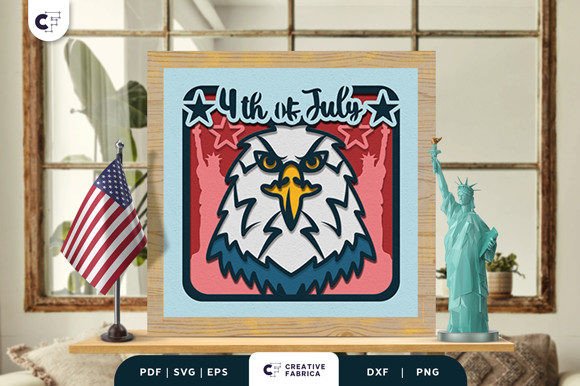
4th of July Eagle 3D SVG for Independence Day
Evaluating Visual Depth for Intimate Holiday Branding
When reviewing the 4th of July Eagle 3D Paper Cut SVG for a recent client project, my primary focus was on versatility and emotional resonance. The client, a small handmade home decor business, needed a visual anchor for an intimate Independence Day campaign. They specifically wanted to move away from loud, chaotic patriotic imagery and instead evoke a sense of heritage, craftsmanship, and cozy celebration. This graphic design asset immediately stood out because it bridges the gap between traditional Americana and modern creative design. The layered paper-cut aesthetic creates an illusion of depth that feels tactile and handcrafted, which is essential for brands trying to connect with audiences who value artisanal quality over mass production.
The mood this 3D SVG establishes is nostalgic yet clean. Unlike flat vector illustrations that can sometimes feel sterile or overly corporate, the shadow and layering effects in this file mimic real physical materials. For a designer, this is a significant advantage. It saves hours of manual rendering time while providing a rich texture that photographs beautifully in product mockups. When I first opened the file, I assessed whether the eagle motif felt too aggressive for a home setting. Fortunately, the stylized, segmented nature of the paper cut softens the symbol, making it appropriate for welcoming porch signs, table settings, and subtle marketing visuals rather than just political or institutional contexts.
Performance Across Print-on-Demand and Digital Channels
In professional practice, a digital product must perform across multiple mediums to justify the investment. I tested this SVG design in several real-world scenarios relevant to small business branding and Etsy product listings. For t-shirt design and apparel, the layered paths allow for stunning multi-color vinyl applications on Cricut or Silhouette machines. The separation of layers is clean, meaning weeders won’t struggle with stray nodes or overlapping cuts, which is a common pain point with lesser-quality Cricut projects.
For digital applications, such as social media graphics and Pinterest pins, the asset holds up exceptionally well at medium to large sizes. I utilized it as a hero element for a seasonal landing page, where the 3D effect added necessary visual interest without requiring complex background photography. In editorial design for a blog post about hosting quiet holiday gatherings, the eagle served as a sophisticated drop cap alternative and section divider. However, its utility extends beyond screens. As a printable design, it translates beautifully to cardstock for DIY ornaments and gift tags. The inherent shadows in the design guide users on how to assemble physical versions, adding value for customers purchasing design bundles for personal crafting.
I also evaluated its potential for sublimation design on mugs and tumblers. Because the style mimics dimensional paper, it prints with a perceived texture that makes flat sublimation ink look more premium. This is a crucial selling point for print-on-demand sellers looking to differentiate their Independence Day merchandise in a saturated creative marketplace.
Strategic Placement: Where the Asset Shines and Where to Pause
Understanding where to deploy a commercial design asset is just as important as the asset itself. The 4th of July Eagle 3D Paper Cut SVG excels in large layout areas where its intricate details can breathe. It is ideal for:
- Packaging Design: Use as a central label element on kraft paper boxes or belly bands to emphasize handmade quality.
- Sticker Design: Perfect for die-cut vinyl stickers where the white border enhances the paper-cut illusion.
- Canva Templates: Serves as a high-impact focal point for editable social media templates sold to other creators.
- Wall Art: Works best as a standalone printable or part of a gallery wall collection focused on rustic Americana.
- Invitations: Adds a tactile feel to digital invites for house parties and BBQs.
However, designers must exercise caution in specific contexts. Due to the complexity of the layered vectors, this asset loses readability at very small sizes. It should not be used as a tiny favicon, a secondary logo mark, or within dense body text. In minimalist branding or strict corporate brand identity systems, the decorative nature of the paper cut may clash with clean, grid-based layouts. Furthermore, if placing this on a busy photographic background, the internal shadows of the SVG can create visual noise. It requires negative space or solid color fields to maintain visual hierarchy and ensure the eagle remains the clear focal point.
Impact on Brand Trust and Audience Engagement
Visual trust is built through consistency and quality. Using a polished illustration like this signals to consumers that a brand pays attention to detail. For handmade businesses, the paper-cut style reinforces the narrative of human creation, which directly supports higher price points and customer loyalty. During my review, I noted that the asset evokes warmth and tradition, emotions that drive engagement during holidays. When audiences see thoughtful design assets rather than generic clipart, they are more likely to stop scrolling and interact with the content.
From a web design perspective, the 3D aspect increases dwell time. Users are naturally drawn to elements that appear interactive or textured. By integrating this clipart into a cohesive seasonal campaign, brands can create a unified look across email newsletters, website banners, and physical packaging. This consistency strengthens recognition and makes the Independence Day promotion feel like a curated experience rather than an afterthought.
Technical Pre-Flight Checklist for Professional Designers
Before clearing this asset for a live client project, I recommend running through a rigorous technical checklist to ensure professional results. Never assume a downloaded file is print-ready without verification.
- Contrast Testing: Always test the PNG design version on both light and dark backgrounds. Ensure the pre-rendered shadows do not disappear against dark colors or look muddy on mid-tones.
- Monochrome Validation: Convert the file to black and white. If the 3D effect relies solely on color contrast rather than luminance, it will fail in single-color embroidery or laser engraving applications.
- Typography Pairing: Test the eagle alongside various typefaces. It pairs naturally with textured serifs and vintage scripts but may conflict with ultra-modern geometric sans-serifs. Ensure the font weight matches the visual weight of the paper layers.
- Vector Integrity: Inspect the SVG code. Check for open paths, unnecessary anchor points, or grouped layers that need ungrouping for vinyl cutting software. Clean geometry ensures smooth production.
- Licensing Verification: Crucially, confirm the commercial license terms. Verify if the asset can be used in end products for sale, if attribution is required, or if there are limits on the number of units produced. Protecting your client from legal issues is part of professional service.
- Mockup Reality Check: Place the asset on realistic mockups before finalizing. A design that looks great on a white artboard might need color grading adjustments when superimposed over a textured linen or wood background.
Ultimately, the 4th of July Eagle 3D Paper Cut SVG is a robust tool for designers targeting the heritage and lifestyle market. It offers a unique blend of digital convenience and analog charm that elevates modern design projects beyond the standard holiday fare. By applying professional judgment regarding placement, pairing, and technical preparation, this asset can significantly enhance the perceived value of seasonal campaigns for crafters, marketers, and small business owners alike.