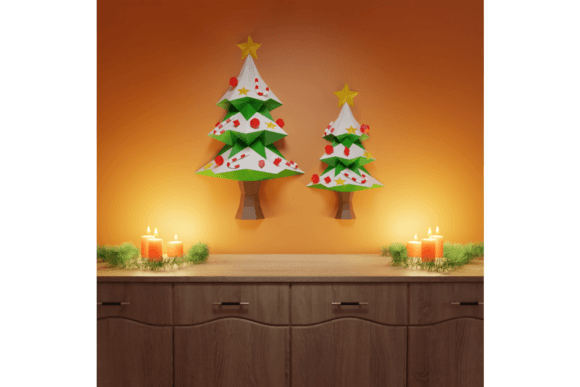
3D Papercraft Christmas Tree: A 3D SVG for Branding
As a brand designer specializing in local business identity and seasonal packaging, I approach every new graphic design asset with a critical eye. When evaluating the 3D Papercraft Christmas Tree, my first impression was not just about its festive appeal, but its structural versatility as a branding element. This asset immediately suggests a mood that is tactile, artisanal, and warmly nostalgic. It does not scream "corporate holiday"; instead, it whispers "handmade heritage." For small business owners, boutique operators, and creative entrepreneurs, this distinction is vital. The papercraft aesthetic implies a level of care and physical craftsmanship that aligns perfectly with businesses selling tangible goods like baked treats, handmade soaps, knitwear, or curated gift boxes. It feels organic yet precise, striking a balance between playful decoration and professional presentation.
Elevating Seasonal Packaging and Product Labels
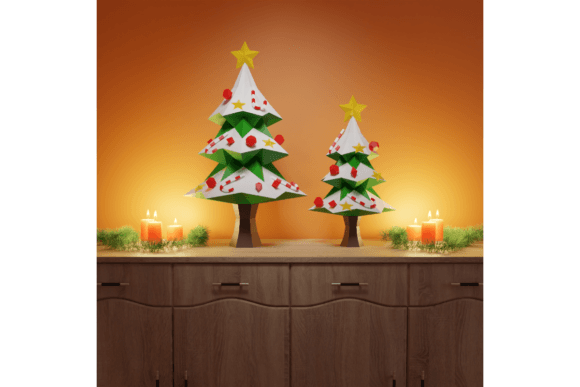
In a recent project for a local artisan candle company, we needed to transition from autumn to winter without completely overhauling their minimalist brand identity. The 3D Papercraft Christmas Tree served as an ideal bridge. Because this is a 3D SVG format, the vector lines remained crisp when scaled down for product labels or blown up for shipping box inserts. We utilized the tree’s layered geometry to create depth on flat packaging surfaces. For product sellers, this asset works exceptionally well as a secondary mark on hang tags, thank-you cards, and sticker seals. It adds visual interest to plain kraft paper or white cardstock without requiring expensive embossing or foil stamping. The two included sizes—50cm and 70cm heights—provide flexibility for both primary packaging faces and smaller accent areas like jar lids or ribbon tags.
Strategic Applications for Local Business Branding
Beyond physical packaging, this asset proves valuable across digital touchpoints. Social media managers can use the papercraft tree as a recurring motif in Instagram stories, carousel posts, and promotional banners to maintain visual consistency throughout the holiday season. For food businesses and cafes, the illustration translates beautifully onto chalkboard menus, window decals, and seasonal cup sleeves. The key to successful small business branding is repetition; using this specific papercraft style across your website header, email newsletter, and physical store signage creates a cohesive narrative. It signals to customers that your holiday campaign is intentional and curated, rather than a collection of random clipart. This consistency builds customer trust and improves shelf appeal by making your products instantly recognizable amidst the chaotic holiday retail environment.
Navigating Color Modes and Material Choices
One of the most practical features of this asset is its adaptability to different printing substrates. The description notes that you can print selected pages on white paper for a snowy look or keep it green for traditional foliage. From a production standpoint, this offers significant cost savings for local businesses. Printing on white stock allows the negative space to define the form, which is excellent for brands wanting a clean, modern, Scandinavian-inspired aesthetic. Conversely, printing on green stock or colored cardstock creates a bolder, more traditional presence. When integrating this into your brand identity, consider how the color choice interacts with your existing palette. A white papercraft tree on a dark navy box reads as premium and elegant, while a green tree on natural brown kraft paper evokes rustic warmth. Always test these variations before committing to a full print run to ensure the contrast supports readability and brand recognition.
Where to Exercise Caution in Commercial Design
While versatile, the 3D Papercraft Christmas Tree requires careful placement. Due to its intricate, layered nature, it should be avoided in areas requiring high information density. Do not place this asset behind ingredient lists, legal disclaimers, or barcode zones, as the visual texture will compete with essential text and reduce legibility. Similarly, ultra-luxury minimalist brands relying on vast whitespace and serif typography might find the craft aesthetic too busy if not balanced correctly. It is also important to avoid using this asset at extremely small scales where the delicate paper folds become muddy or indistinguishable. In packaging design, clarity is king; if the tree loses its definition at 1cm wide, opt for a simpler icon for that specific application and reserve this detailed illustration for hero graphics, unboxing experiences, and larger marketing visuals.
Technical Evaluation and Pre-Press Checklist
Before incorporating any digital product into a client project, I run through a rigorous technical evaluation. First, verify the commercial license. Just because an asset is available on a creative marketplace does not automatically grant rights for resale on physical products or unlimited commercial use. Confirm the terms specifically cover your intended application, whether that is product packaging, advertising, or merchandise. Second, inspect the vector editability. Even though this is marketed as a papercraft template, the underlying SVG structure should allow for color adjustments and layer separation within software like Illustrator or Affinity Designer. This ensures you can match the tree exactly to your brand colors rather than settling for default greens.
- Mockup Testing: Always apply the asset to a realistic product mockup before finalizing. View it under different lighting conditions to see how the simulated shadows interact with real-world textures.
- Typography Pairing: Test the asset beside your primary fonts. Papercraft illustrations generally pair best with rounded sans-serifs, soft serifs, or organic handwritten scripts. Avoid rigid geometric typefaces that may clash with the imperfect, folded nature of the design.
- Print Quality Check: If using this for physical assembly or direct printing, check the line weight. Lines that are too thin may disappear on textured paper, while lines that are too thick may make the model look heavy.
- File Format Versatility: Ensure you have access to both SVG and PNG versions. SVG is essential for scalable print work and web design, while high-resolution PNGs with transparent backgrounds are necessary for Canva templates, social media graphics, and quick editorial layouts.
Building Emotional Connections Through Tactile Design
Ultimately, the value of the 3D Papercraft Christmas Tree lies in its ability to foster an emotional connection. In an era of digital saturation, tactile visuals trigger memories of childhood crafting and personal effort. For handmade sellers and florists, this resonance is a powerful marketing tool. It tells your customers that your business values tradition, patience, and beauty. Whether used as a standalone decorative element on a gift tag or integrated into a complex holiday ad campaign, this asset supports a narrative of authenticity. By treating this graphic design asset as a strategic component of your visual hierarchy rather than mere decoration, you elevate your professional branding and create a memorable holiday experience that encourages customer loyalty long after the season ends.